The walking tour in Samarkand includes a visit to the Amir Temur Statue, the Amir Temur Mausoleum, and the iconic Registan Square with its three madrassas, the oldest dating back to the 15th century. The program continues with a walk along the Silk Road street known as Tashkent Street, followed by visits to the Bibi-Khanum Mosque and the Siyob Bazaar, and after lunch, the tour concludes with an exploration of the Shakhi Zinda Complex. The walking tour in Samarkand offers travelers an excellent opportunity to explore the city’s iconic landmarks while enjoying numerous chances to capture beautiful photographs throughout the journey.
The walking tour in Samarkand will commence with a meeting in front of the Amir Temur Statue, where the founder of the great dynasty is depicted seated on his throne.
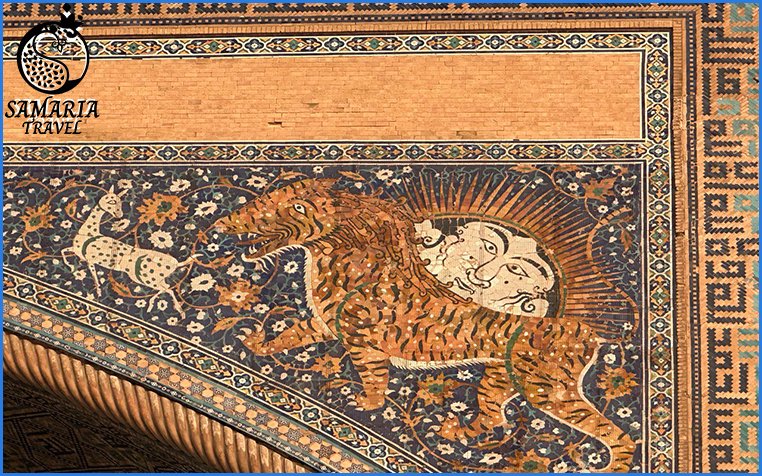
The walking tour in Samarkand continues with the second stop at the Gur-Amir Mausoleum (“the tomb of the king” in Uzbek), a must-see landmark from the 15th century and the final resting place of Temur; although originally intended for Temur’s favourite grandson, Muhammad Sultan, Samarkand was ultimately chosen as the more fitting burial place. The third stop is Registan Square (“sandy place” in Uzbek), dating from the 15th to 17th centuries, a spectacular architectural ensemble distinguished by magnificent Islamic designs and intricate calligraphy adorning its mosques and madrassahs. Ulugbek Madrasa, built between 1417 and 1420 under the patronage of Ulugbek—the Astronomer King and grandson of Temur—is the oldest madrasa in Registan Square. Tilya-Kori Madrasa, meaning “gold-covered madrasa,” constructed in the 17th century, is the one madrasa travelers are encouraged to enter, as its golden mosque ceiling to the left of the courtyard is truly captivating. Sher Dor Madrasa, known as the “tiger” or “lion” madrasa, was erected between 1619 and 1636 by Yalangtush Biy and is considered one of the most photographed buildings in the world. The tour proceeds with a walk along Tashkent Street, followed by a visit to the 15th-century Bibi Hanim Mosque, built in honor of Temur’s chief wife, Saray Mulk Khanum, and then to the local Siyob Market. The tour concludes at the Shahi Zinda Complex (“alive king” in Uzbek), dating from the 12th to 20th centuries, the burial place of royal figures and nobles, and one of the most spiritual sites in Uzbekistan.