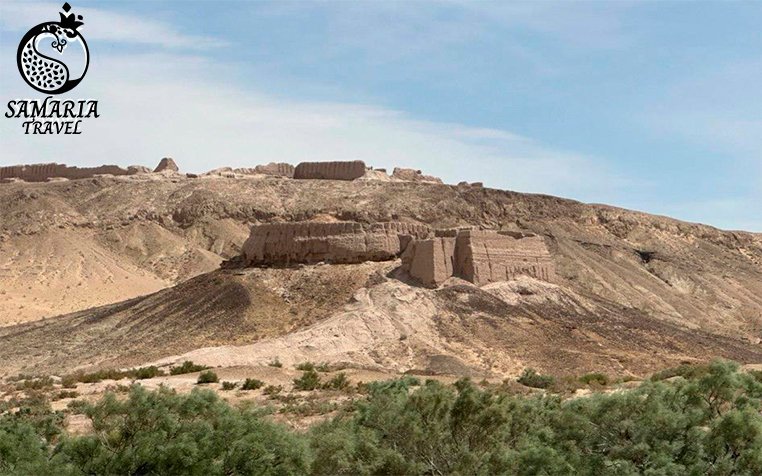
A one-day castle tour from Khiva is an exceptional opportunity to explore the ancient fortresses of the Kyzyl Kum Desert, including Ayaz Qala Fortress, Kavat Qala Fortress, Toprak Qala Fortress, and Kyzyl Qala Fortress, offering visitors a remarkable insight into the region’s rich historical and architectural heritage. On a one-day castle tour from Khiva, travelers visit Ellik Qala (“Fifty Fortresses”), a name that vividly reflects the remarkable archaeological heritage hidden beneath the desert sands; of the approximately twenty remaining fortresses in the area, this tour includes visits to four of the most impressive sites, notably Toprak Qala and Ayaz Qala. This one-day castle tour from Khiva offers travelers an in-depth exploration of the ancient fortresses of Khorezm, beginning with Kavat Qala, a once-flourishing urban center with archaeological remains dating from the 4th century BC to the 13th century, including residential quarters, a ruler’s castle with columned halls, and decorative clay carvings preserved on raw clay walls; believed to have been destroyed during the Mongol invasions, the site reveals nearly 2,400 years of layered history and reflects its former role as the hub of a complex irrigation system surrounded by prosperous settlements, particularly between the 11th and 13th centuries. The tour continues to Ayaz Qala, a “must-see” desert fortress dramatically situated on a flat hilltop, where massive outer walls dating back to at least the 4th century BC still rise up to 10 meters high, clearly demonstrating the scale and defensive strength of the site. Visitors then explore Kyzyl Qala (“Red Fortress”), an ancient stronghold of Khorazm built between the 1st and 4th centuries AD and buried beneath desert sands for centuries before its discovery by Professor Tolstov in 1938, followed by Toprak Qala, once the largest city in the region, whose vast ruins and palace friezes from the 2nd–3rd centuries AD, excavated by Tolstov in 1938, testify to its former grandeur before its decline after the destruction of irrigation canals, after which travelers return to Khiva.